




【KU-STAR Program for Australia 2026】Traditional “Hime Wagasa” Umbrella Making Experience at Tsujikura, a long-established Kyo-Wagasa shop
Australia KU-STAR Kyoto City Kyoto University TsujikuraThe Division of Graduate Studies has been conducting the KU-STAR (Kyoto University Short-Term Academic Research) Program, a short-term research internship, since last year. In this second intake from Australia, 10 students are participating and engaging in research in their respective laboratories for approximately 1.5 months.
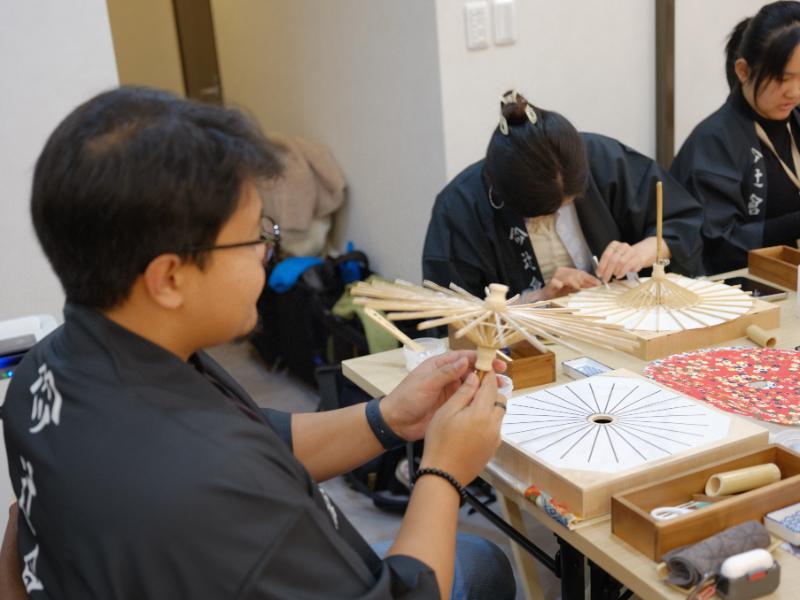
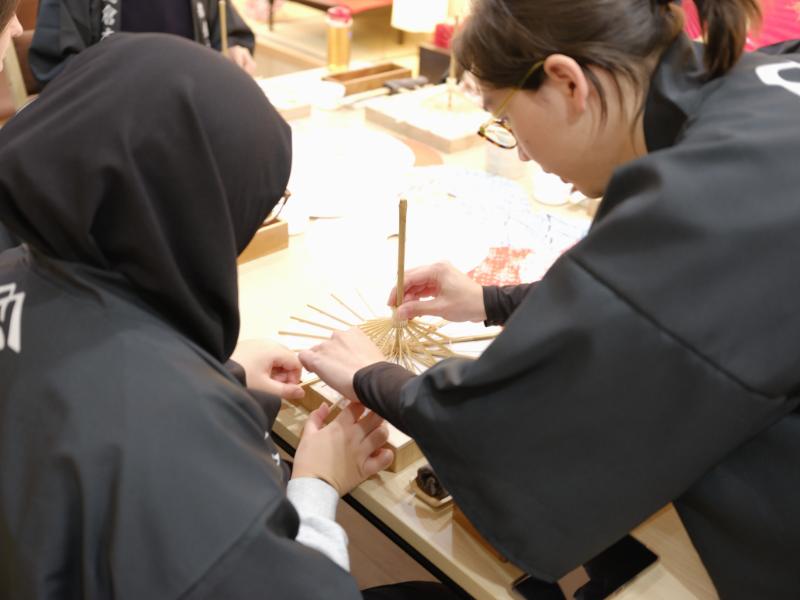
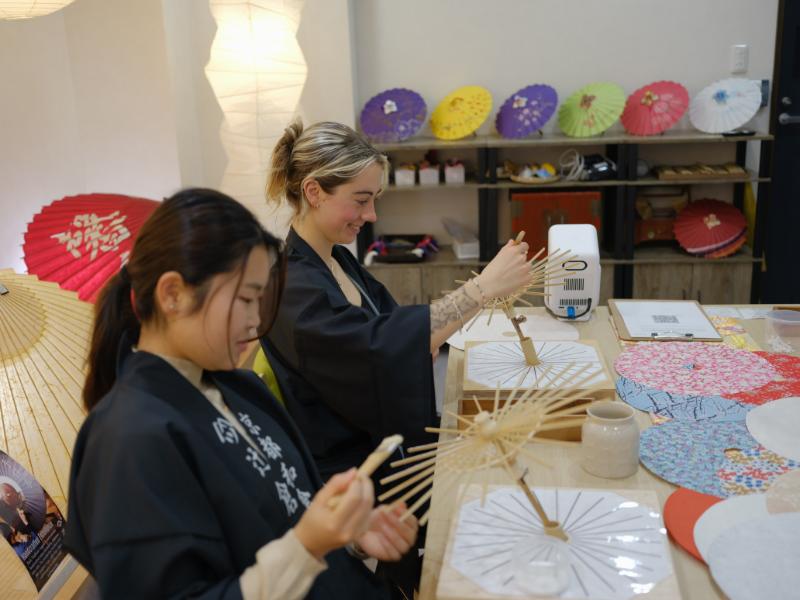
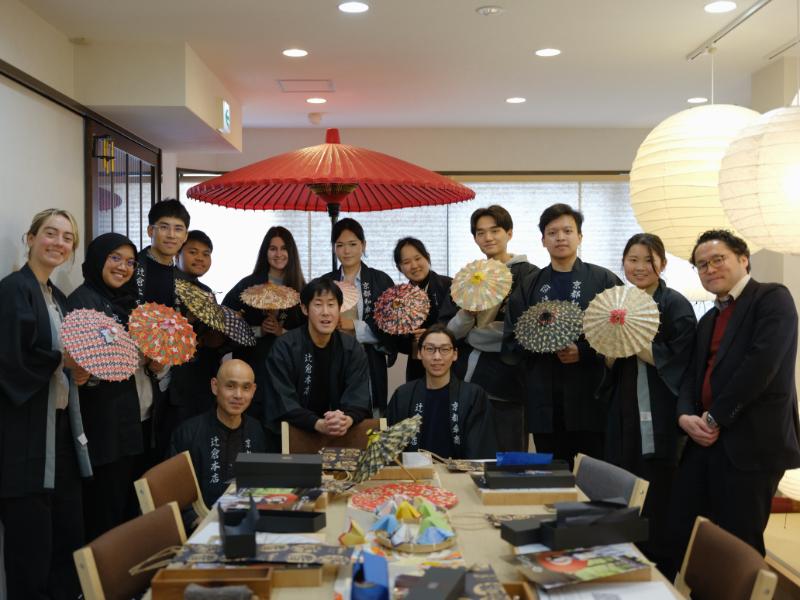
On February 6, 2026, based on the Comprehensive Partnership Agreement between Kyoto University and Kyoto City, and with the special cooperation of the Kyoto City government, KU-STAR students visited Tsujikura (Nakagyo-ku, Kyoto), Japan’s oldest Japanese umbrella shop founded in 1690. The students experienced making their own “Hime Wagasa” (miniature-sized Japanese umbrellas), providing a precious opportunity to touch the essence of Kyoto’s traditional industries.
Learning History and Craftsmanship in a Historic Workshop
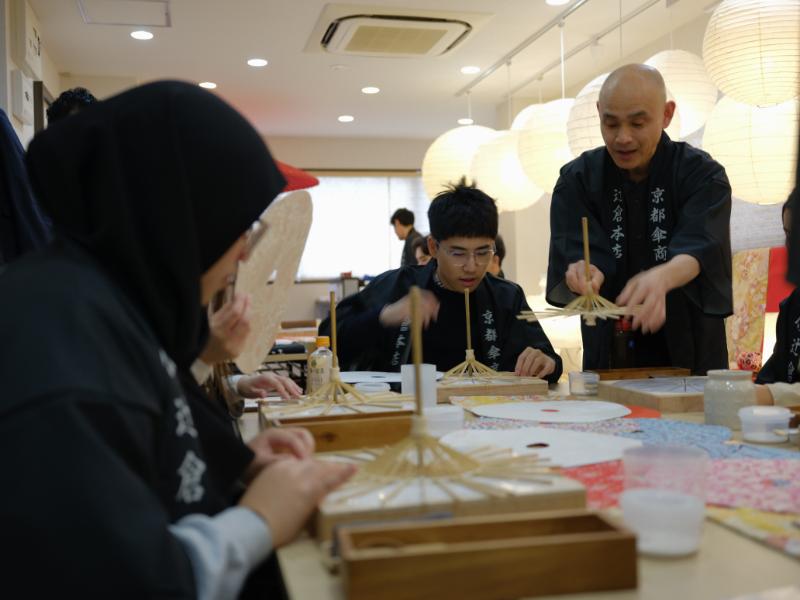
Prior to the workshop, Mr. Noriaki Tsujino, Managing Director and Exclusive Wagasa Artisan, introduced the history of Tsujikura and the different types of Kyo-Wagasa. He shared that their process begins with the artisans personally harvesting 3 to 5-year-old bamboo from the groves of Kyoto. Students were deeply impressed by the uncompromising commitment to craftsmanship, starting from the raw materials.
A Hands-on Experience in Traditional Attire
Wearing Happi coats, students learned the delicate assembly process from three artisans. They attached Washi paper to handcrafted frames and carefully folded it to feel the bamboo’s flexibility. After meticulously attaching the “Kappa” (top cover), the artisans added the final touches, completing each student’s one-of-a-kind “Hime Wagasa.”
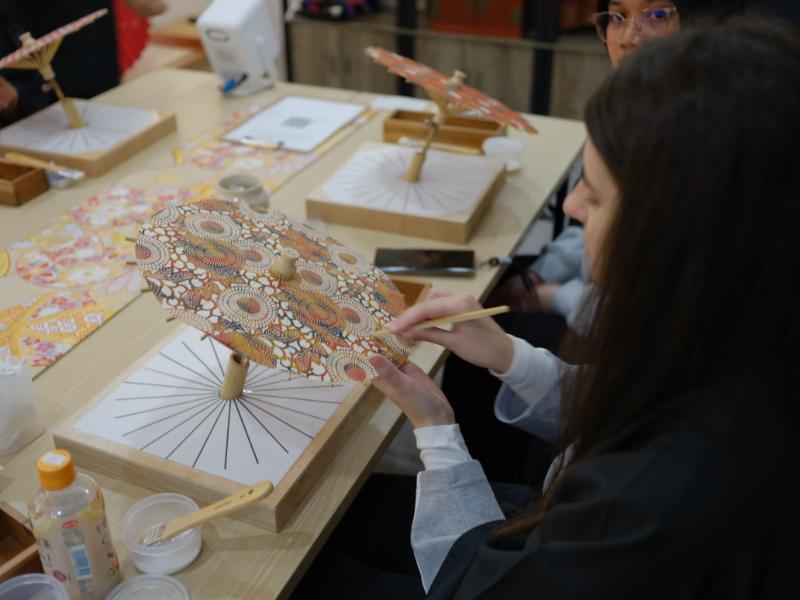
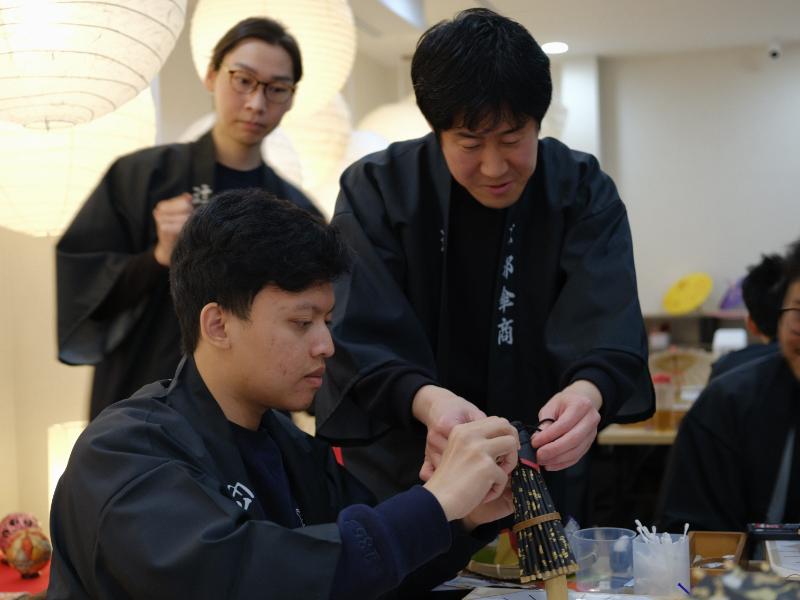
Tradition, “Engi,” and Gratitude
After the workshop, students visited the shop to explore a diverse collection of umbrellas, including vibrant designs featuring Ukiyo-e art and modern collaboration pieces.
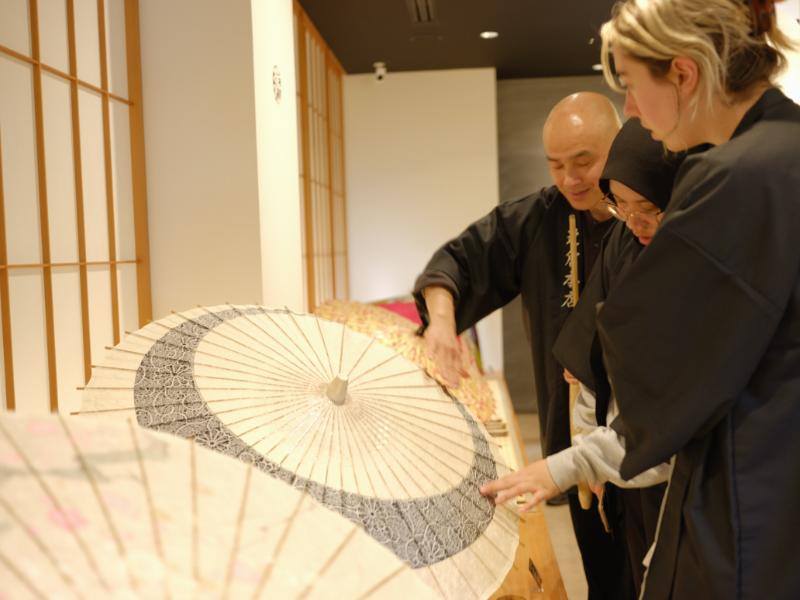
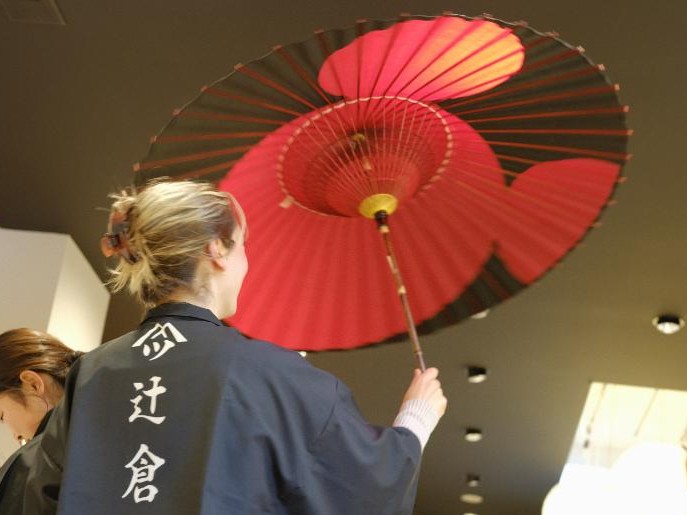
As the session drew to a close, Mr. Tsujino explained that Japanese umbrellas are considered “Engi-mono” (lucky charms) meant to “ward off evil and nurture connections (En).” They learned that these items are imbued with a spiritual wish for the user’s happiness.
Representing the participants, Paris (The University of Adelaide) expressed her gratitude: “This was an incredibly precious experience. The umbrella I made today will be a wonderful souvenir from Kyoto, Japan, and a cherished memory of my time here.” This experience provided a meaningful opportunity for the students to deepen their understanding of Kyoto’s history and traditional craftsmanship.
-
2026.03.16 【KU-STAR Program for Australia 2026】Final Presentation and Closing Ceremony
Australia KU-STAR Kyoto University research -
2026.02.16 【KU-STAR Program for Australia 2026】 Corporate Visit to Shimadzu Corporation under the Comprehensive Collaborative Agreement
Australia KU-STAR Kyoto University Shimadzu Corporation -
2026.02.16 【KU-STAR Program for Australia 2026】Traditional “Hime Wagasa” Umbrella Making Experience at Tsujikura, a long-established Kyo-Wagasa shop
Australia KU-STAR Kyoto City Kyoto University Tsujikura -
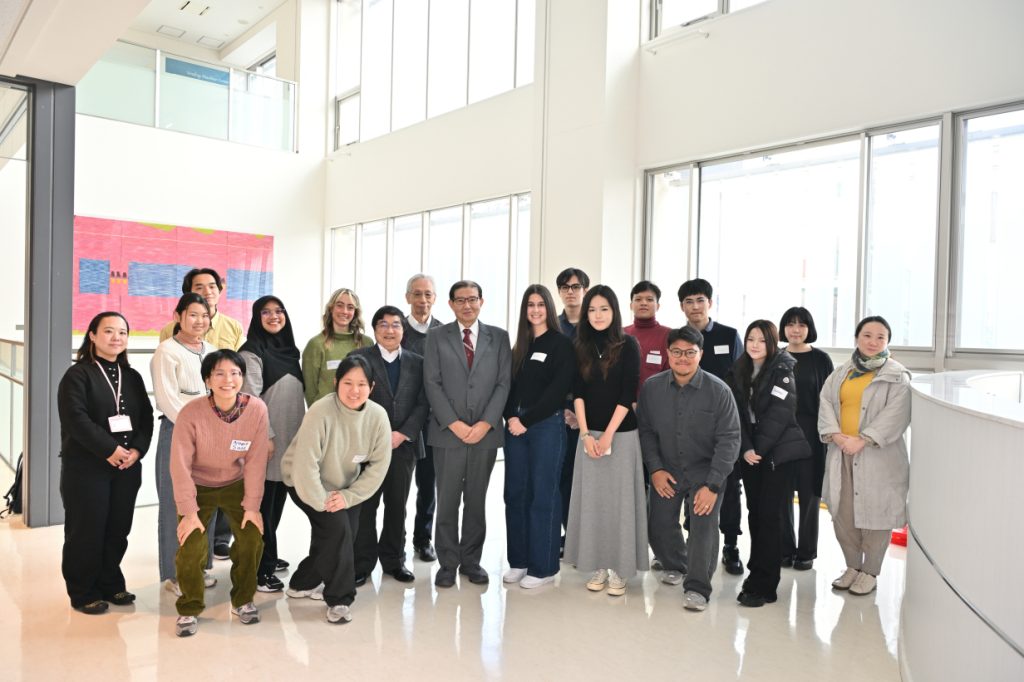
2026.01.21 KU-STAR Program for Australia 2026 Launches!
Australia internship KU-STAR Kyoto University research -

2025.12.18 PhilDOST-Kyoto University Graduate Scholarship Program Launch
Kyoto University Scholarship -

2025.11.13 Poster Presentation and Research Exchange by DoGS Fellows Held in AY2025.
Poster Presentations -

2025.10.22 Inspired by Research Internship: How KU-STAR Led Vivian to a Master’s Program at Kyoto University
India internship KU-STAR Kyoto University research -
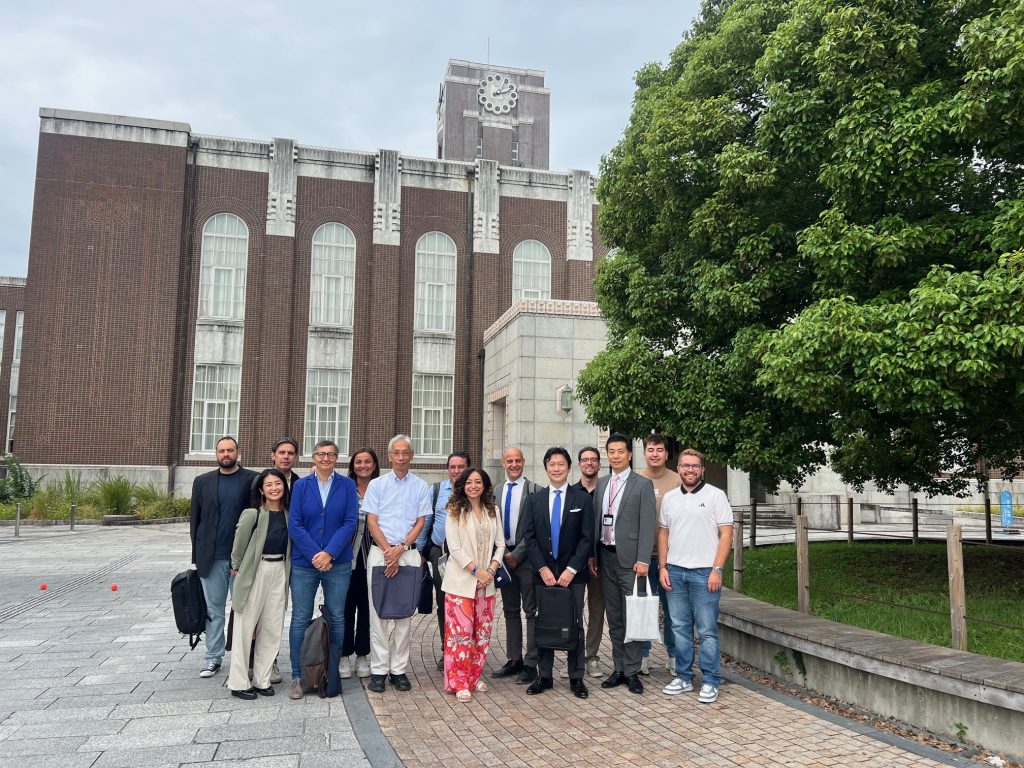
2025.10.1 Clust-ER Innovate Delegation from Italy Visits Kyoto University for Exchange on Lifelong Learning (September 24, 2025)
Career Italy reccurent -

2025.09.29 【KU-STAR Program for India 2025】Fujitsu Company Information Session Held
India internship KU-STAR Kyoto University research -
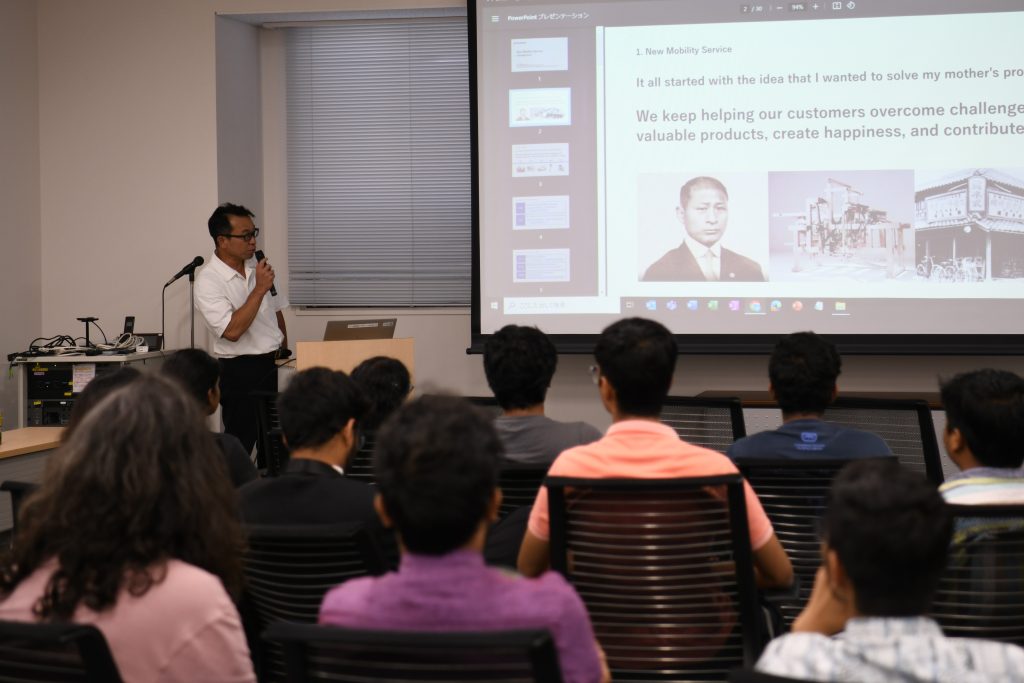
2025.07.31 【KU-STAR Program for India 2025】 Suzuki Motor Corporation Information Session Held
India internship KU-STAR Kyoto University -
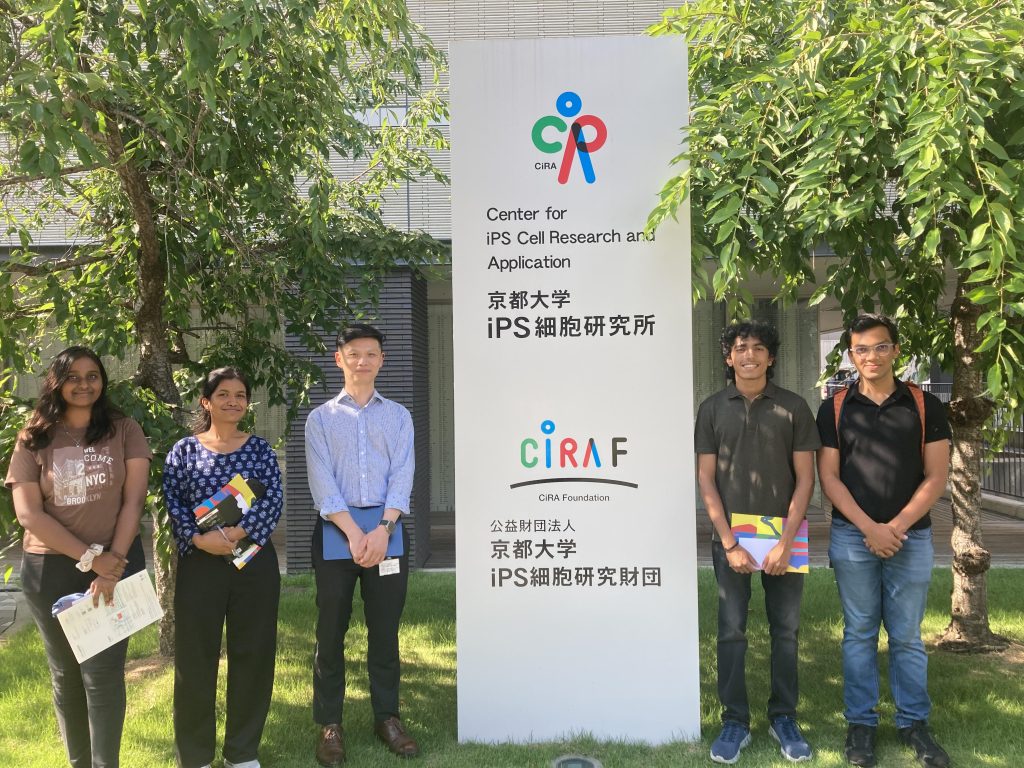
2025.07.30 【KU-STAR Program for India 2025】A Glimpse into Cutting-Edge Research at CiRA (Center for iPS Cell Research and Application)
India internship KU-STAR Kyoto University research -
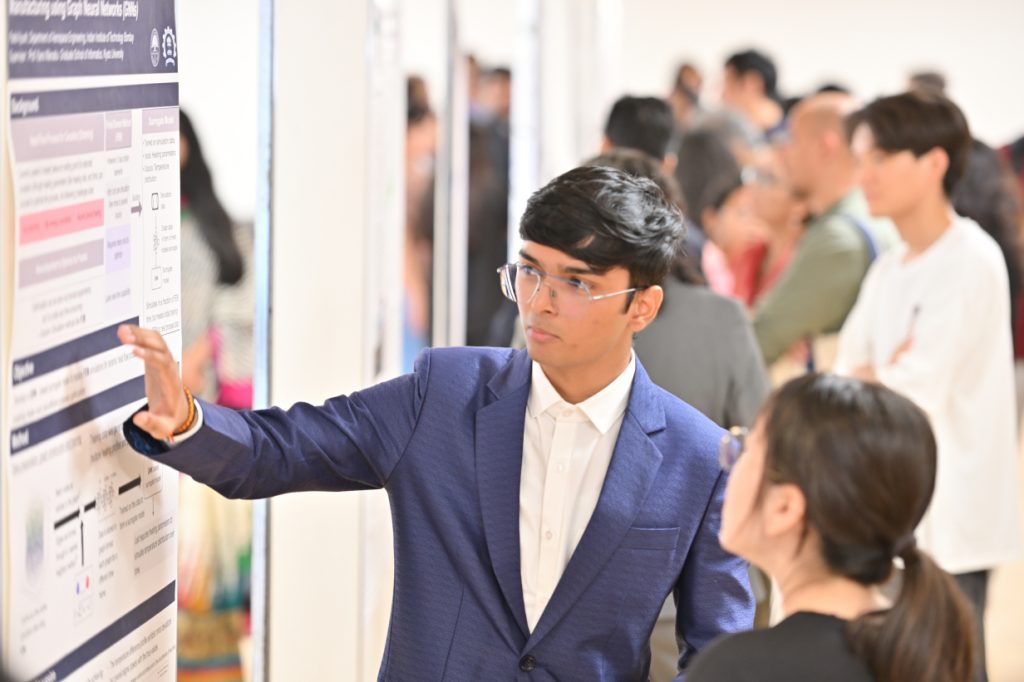
2025.07.29 【KU-STAR Program for India 2025】 Celebrating a Successful Final Presentation Session
India internship Kyoto University research -
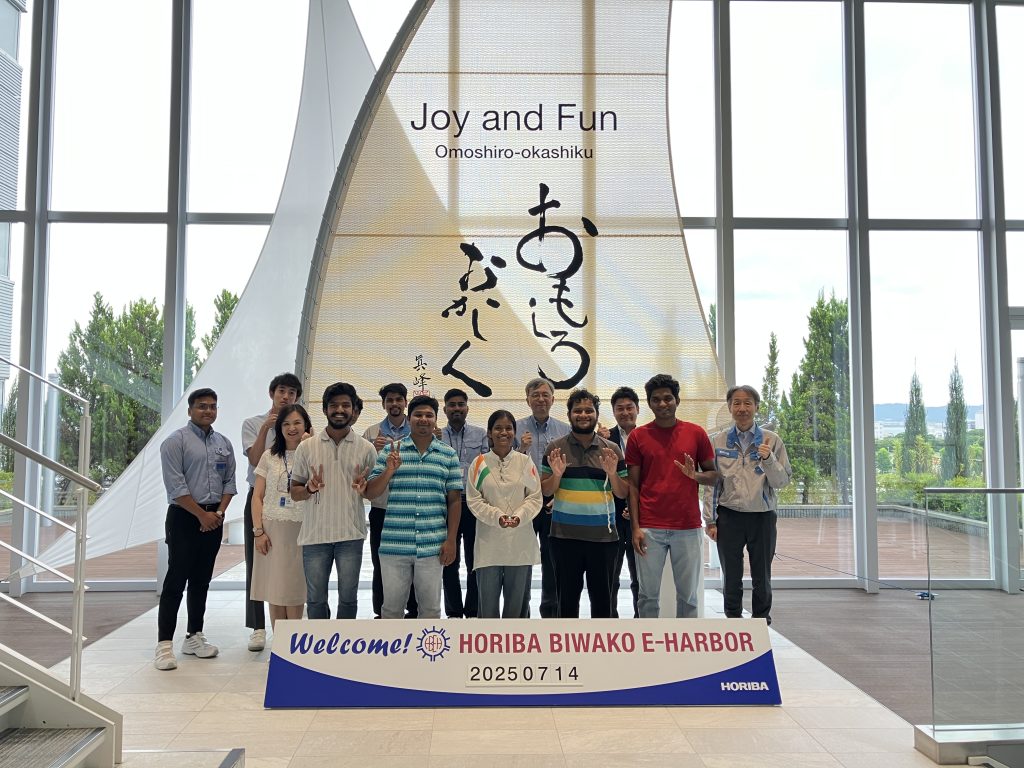
2025.07.24 [KU-STAR Program for India 2025] Visit to HORIBA Ltd.
India internship KU-STAR Kyoto University research -
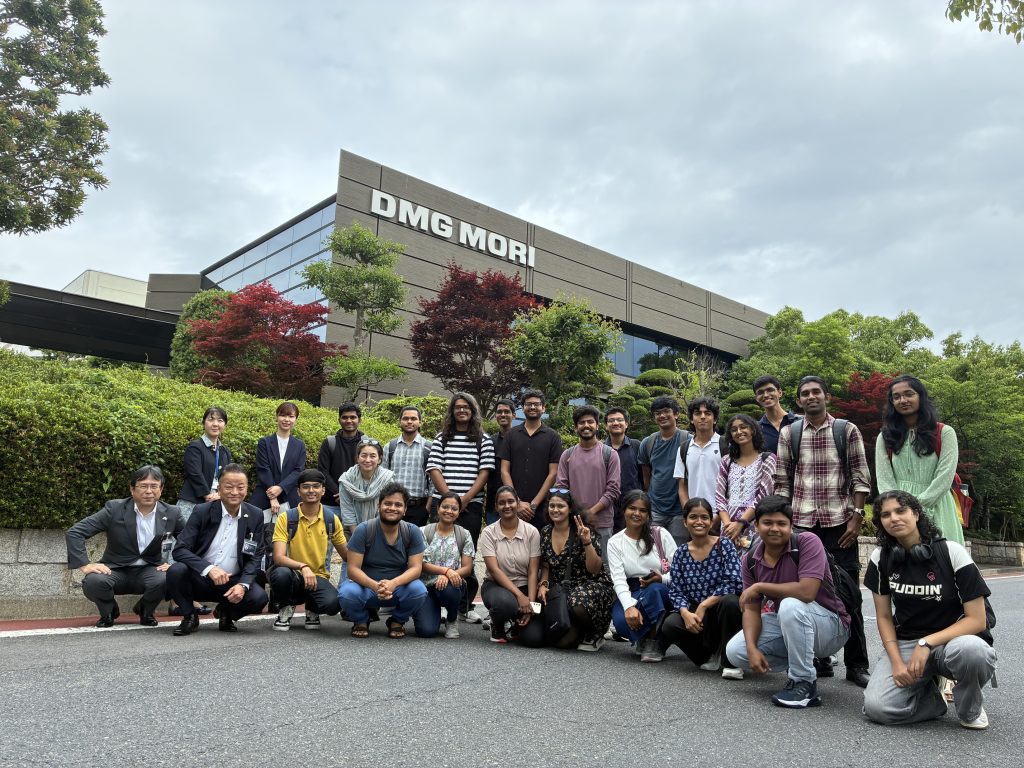
2025.07.17 【KU-STAR Program for India 2025】 Experiencing Cutting-Edge Automation: DMG MORI CO., LTD. Visit
India internship KU-STAR Kyoto University -
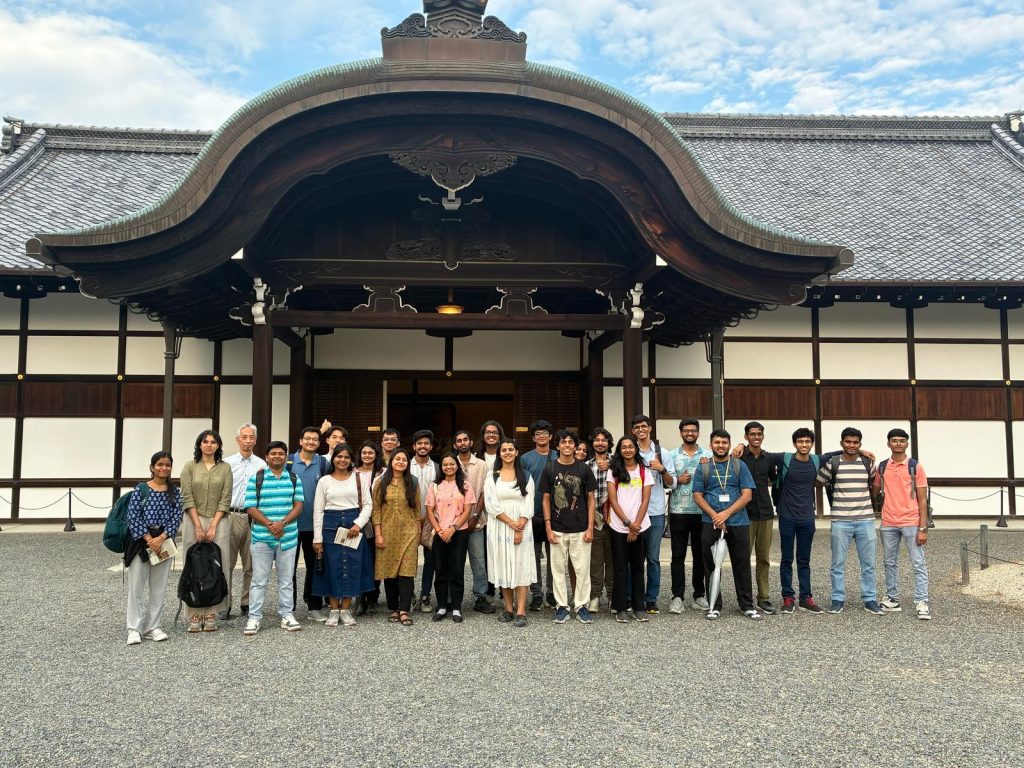
2025.06.23 【KU-STAR Program for India 2025】Exploring World Heritage Site Nijo-jo Castle: A Glimpse into Japanese History and Culture
India internship KU-STAR Kyoto University Nijo-jo castle research -

2025.06.6 【KU-STAR Program for India 2025】Innovation in Action: KU-STAR Program Students Visit Samco Inc.
India internship KU-STAR Kyoto University research -

2025.06.5 KU-STAR Program for India 2025 participants visited Shimadzu Corporation
India internship KU-STAR Kyoto University research -
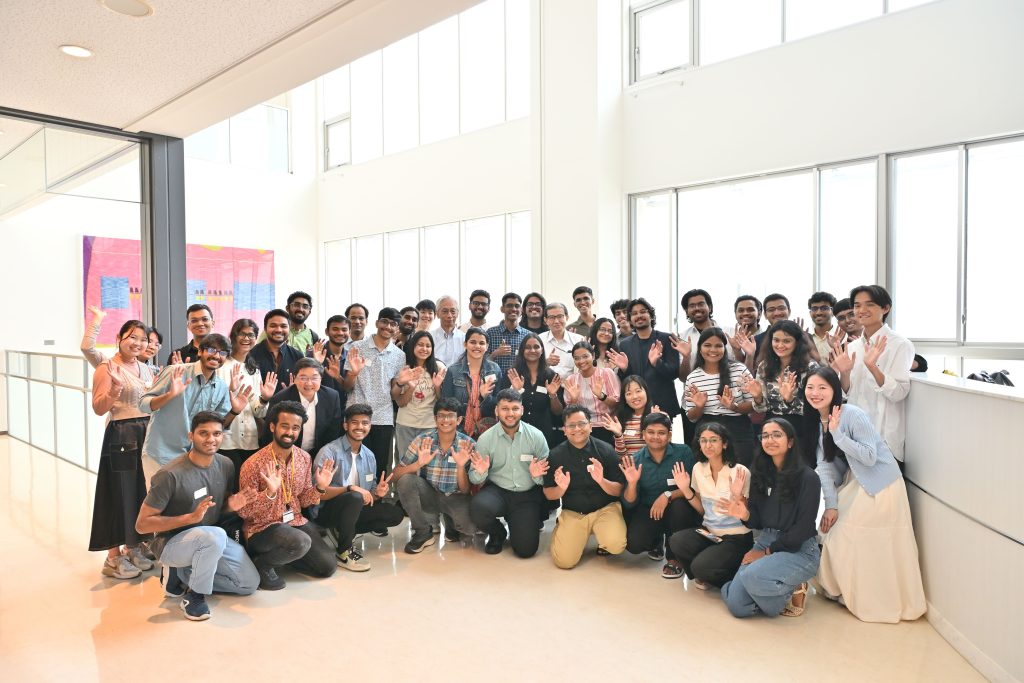
2025.05.30 KU-STAR Program for India 2025 Kicks Off!
India internship KU-STAR Kyoto University research -
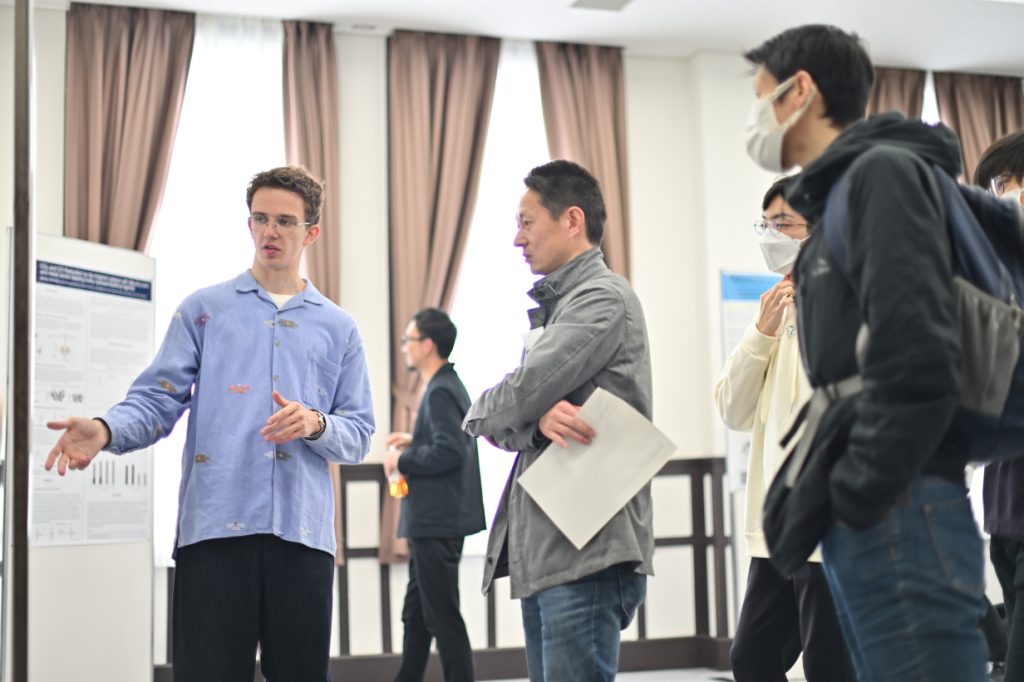
2025.03.19 KU-STAR Program for Australia 2025 concludes following final presentations
Australia internship KU-STAR Kyoto University -
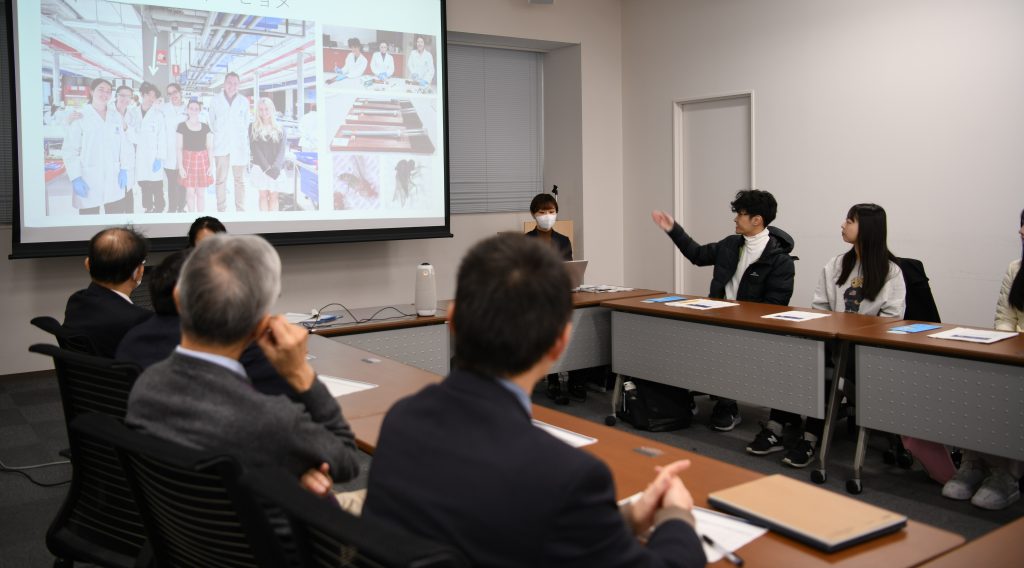
2025.03.18 Kyoto University Short-Term Academic Research (KU-STAR) Program for Australia begins with 4 students from the University of Melbourne
Australia internship KU-STAR Kyoto University オーストラリア 京都大学 -
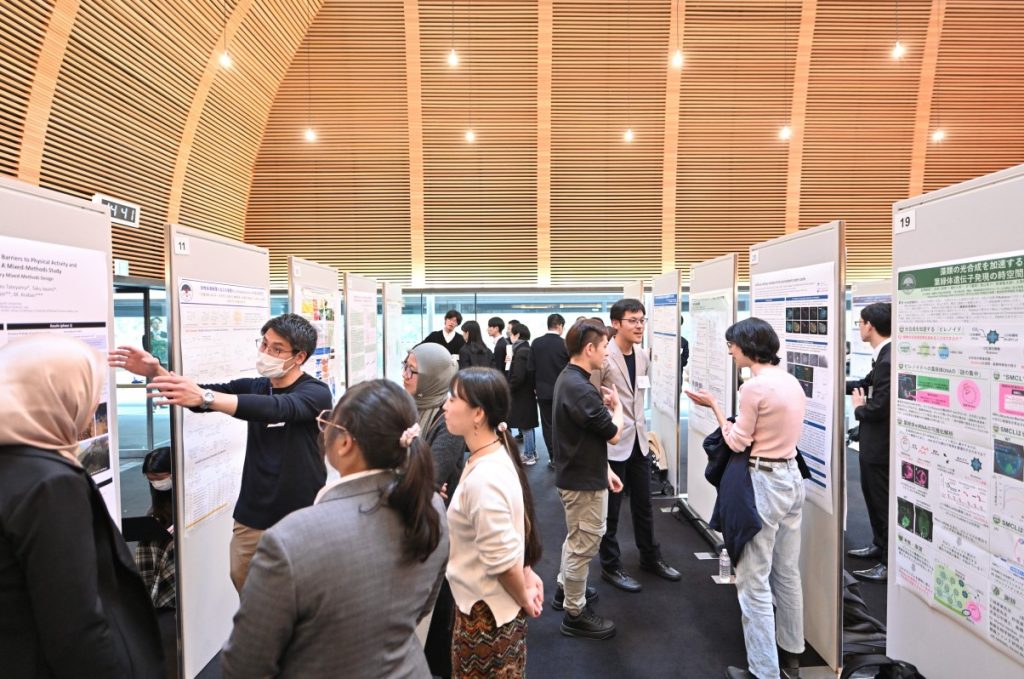
2024.12.16 “Poster Presentations and Research Exchanges by DoGS Fellows” took place in November again.
DoGS Fellows Kyoto University Poster Presentations -
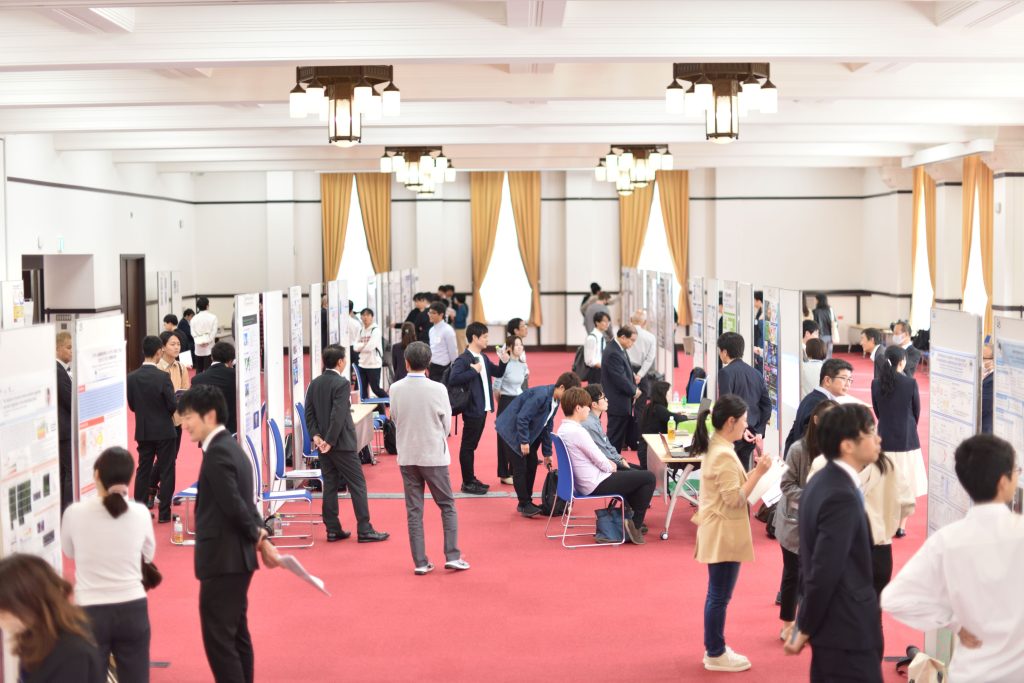
2024.11.13 “Poster Presentations and Research Exchanges by DoGS Fellows” took place.
DoGS Fellows Kyoto University Poster Presentations -
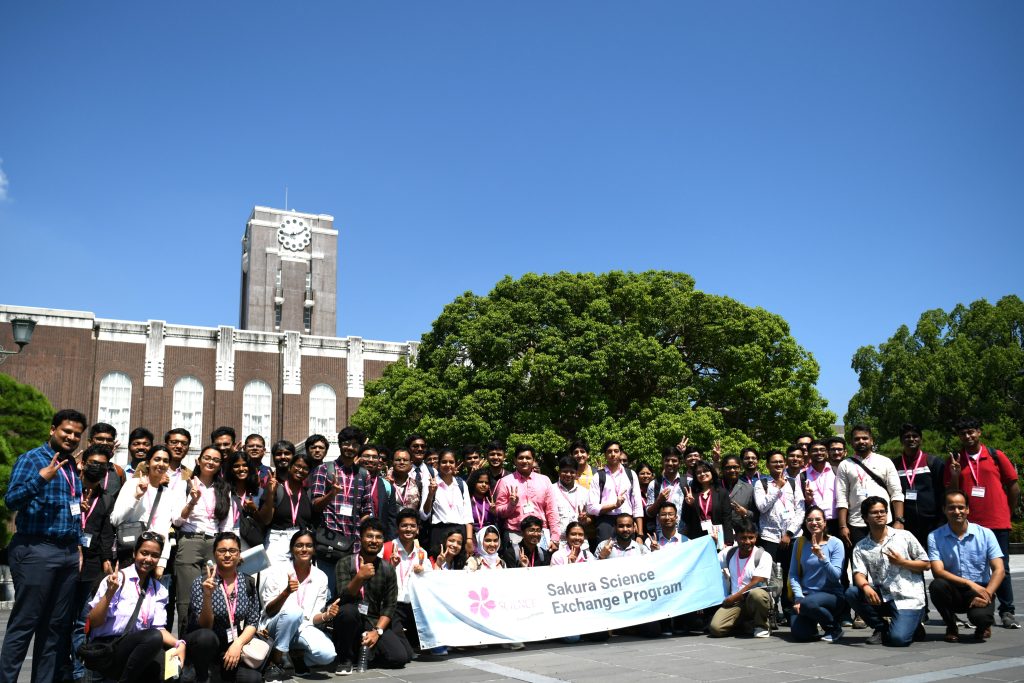
2024.09.27 Sakura Science Indian University Program students visit Kyoto University
India JST Kyoto University Visit -
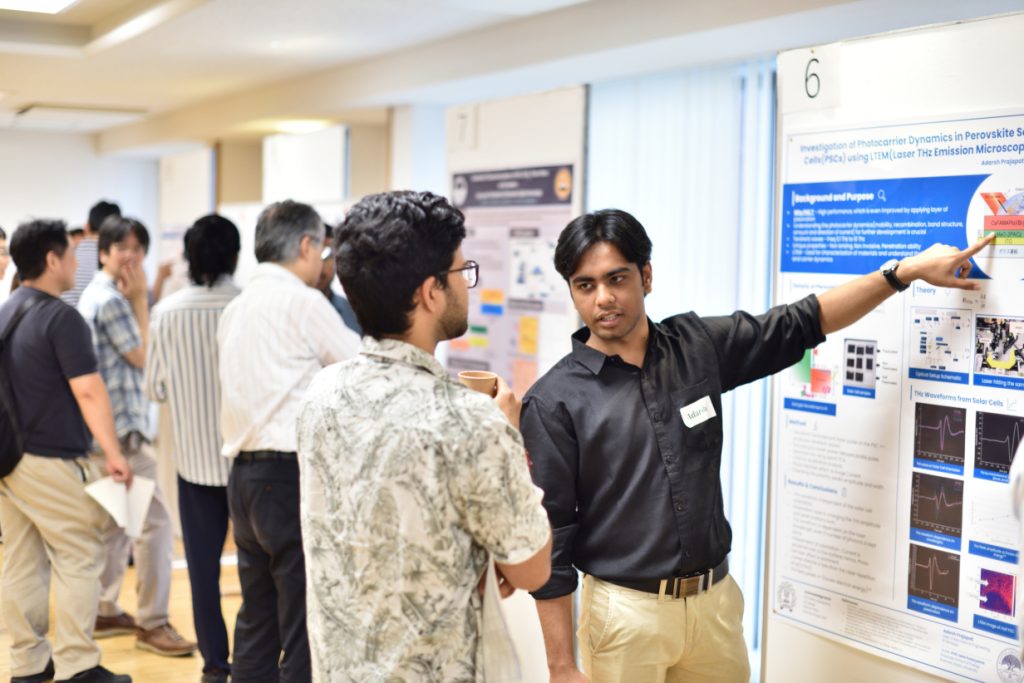
2024.08.7 KU-STAR Program concludes with final presentations
IIT internship KU-STAR Program Kyoto University research インド 大学院教育支援機構 -
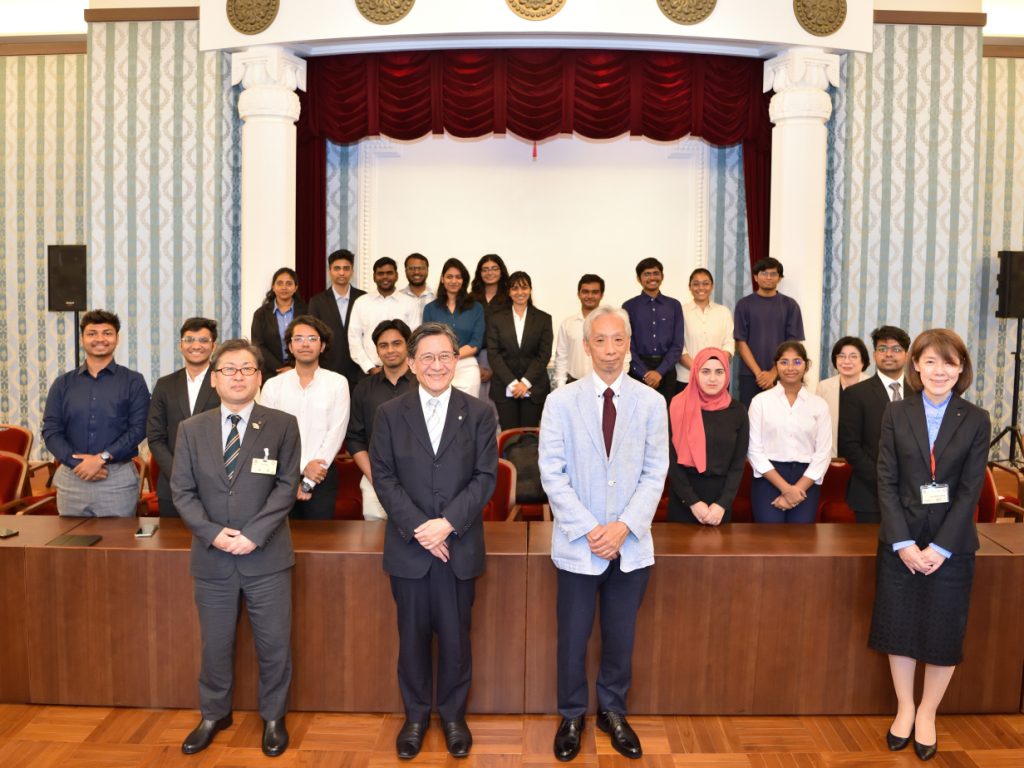
2024.07.9 【KU-STAR Program】KU-STAR Program students pay a courtesy call on Kyoto Mayor Koji Matsui
IIT India KU-STAR Program Kyoto University research インド 京都大学 大学院教育支援機構 -
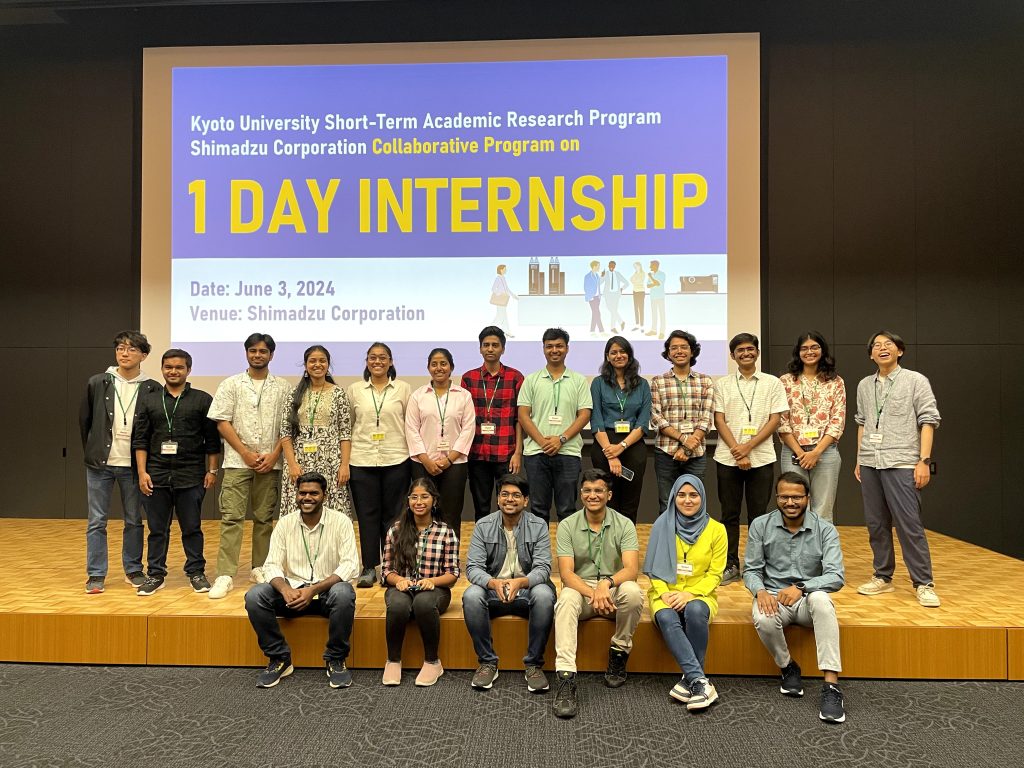
2024.06.25 KU-STAR Program participants from India visit Shimadzu Corporation
IIT internship Kyoto University research 京都大学 大学院教育支援機構 -
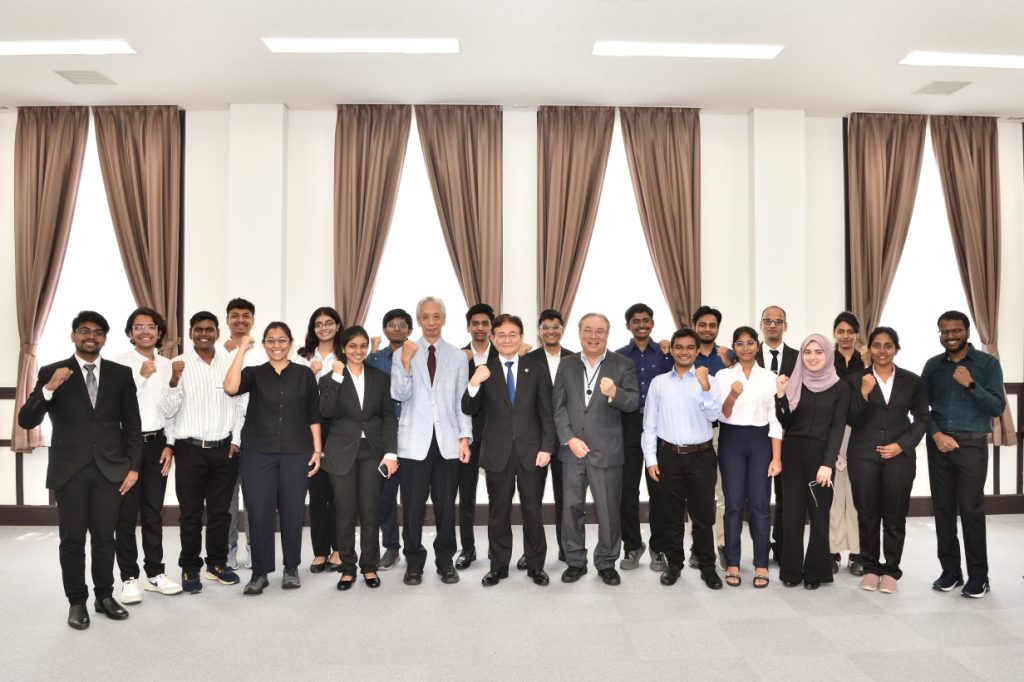
2024.06.13 Kyoto University Short-Term Academic Research (KU-STAR) Program commences with 18 students from India’s leading institutes
India internship KU-STAR Kyoto University research インターンシップ インド 京都大学 大学院教育支援機構 研究 -
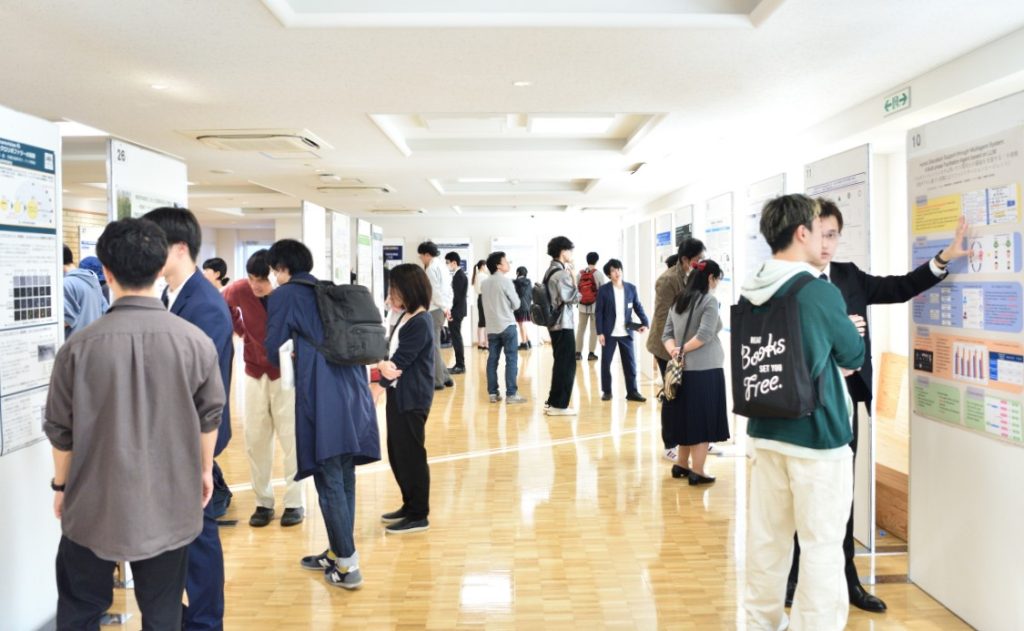
2023.11.10 “Poster presentations and research exchanges by SPRING Fellows and Fellowship recipients” took place on October 27th and November 1st.
-
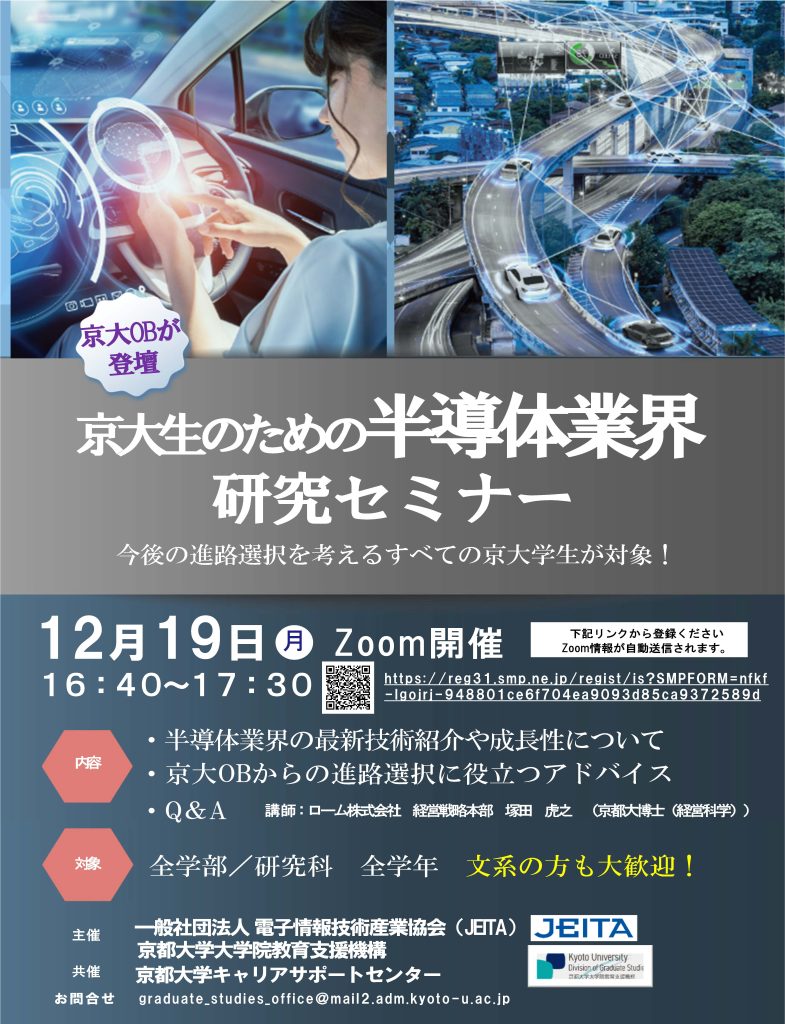
2023.02.28 “Seminar on the Semiconductor Industry for Kyoto U students” took place on December 19, 2022.
-
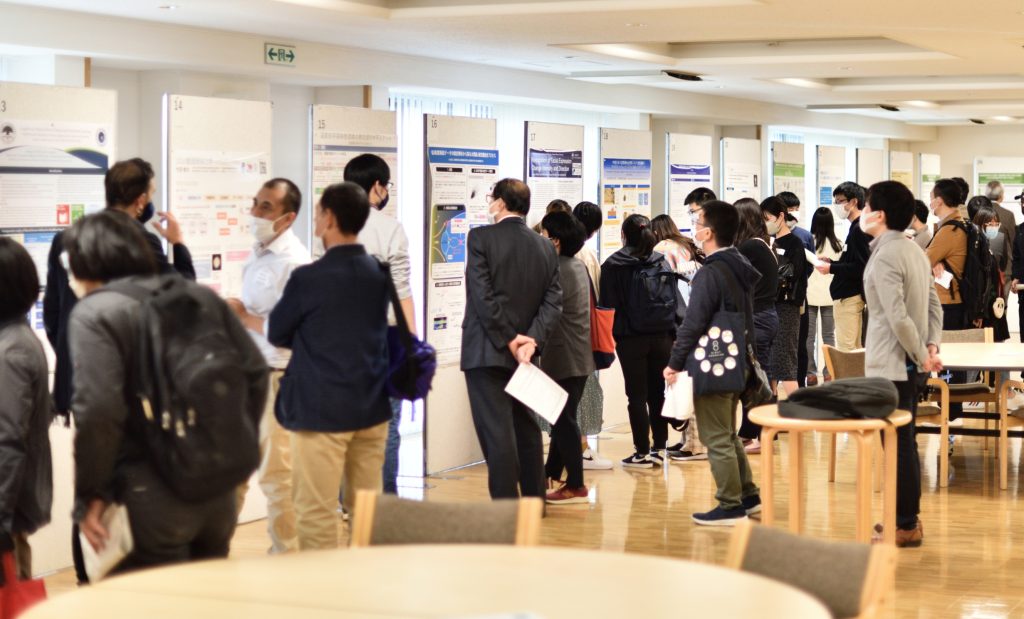
2022.12.9 “Poster presentations and research exchanges by SPRING Fellows and Fellowship recipients” took place on October 21st and 27th.